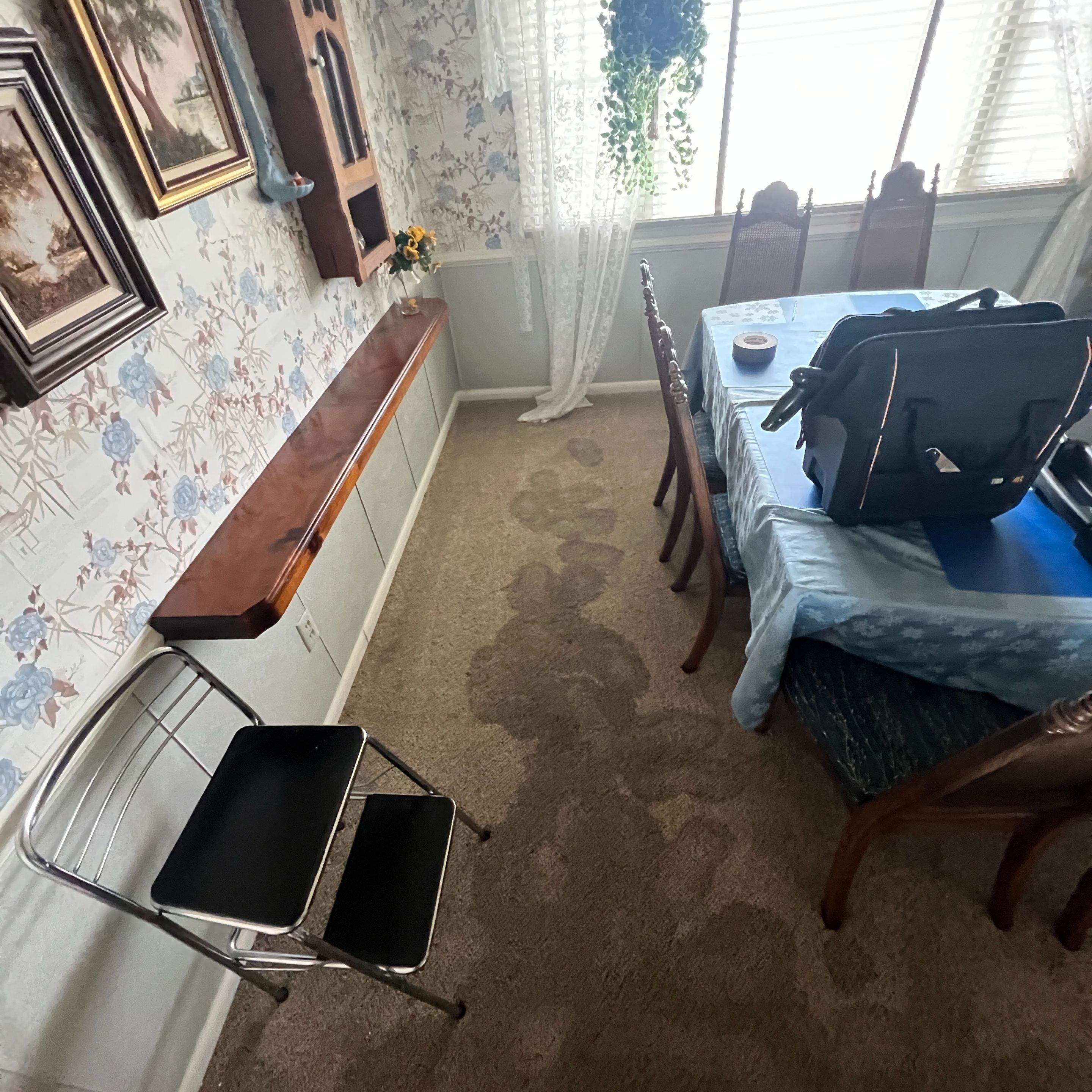
Job 1: The Overnight Cycle That Ran Dry
Two story in a quiet Quaker Ridge at the Legends at Geist pocket. Homeowner started the dishwasher at 10 p.m., went to bed. The drain solenoid stuck open, and water ran out of the tub onto the kitchen floor for roughly six hours. We arrived in most cases within 2 hours of the morning call. Engineered hardwood already cupping. Moisture meter pegged at 28% on the planks closest to the appliance, 19% at the edges of the kitchen, and a surprising 22% reading inside the dining room wall cavity twelve feet away.
Decision: pulled the toe kicks, drilled inspection holes in the cabinet sides (small, plug them later), and ran a thermal sweep across the slab transition. Water had traveled under the floating floor and pooled at the foam underlayment. We pulled the affected planks rather than try to dry in place. With engineered wood, once cupping crosses a certain threshold, you are chasing a refinish you will never quite hit. Honest call: replace the run, save the rest.
One detail worth noting from this job: the Sawgrass Water Restoration unit had a manufacturer bulletin out on that exact solenoid two years prior, and the homeowner never saw it. We now ask every customer to register their appliances, because the recall notices actually do reach you when you do. Took maybe four minutes on the manufacturer site while we packed up.
Job 2: The Slow Weep Nobody Noticed
This one is the more common call, and the more expensive one. Townhome owner smelled something musty for weeks and assumed it was the dog. The dishwasher supply compression fitting was weeping maybe a teaspoon an hour behind the side panel. Months of that built a colony under the cabinet floor. By the time we opened it, we were no longer just talking water damage, we were talking S520 territory.
Decision: contained the kitchen, removed the lower cabinet bank, cut back the affected drywall, and brought in a hygienist for clearance testing at the end. The lesson we keep repeating: a leak you cannot see is the one that costs the most. If you want to read more on this pattern, our notes on hidden water damage from a slow leak cover the same failure mode in other appliances.
I also want to flag what the particleboard cabinet floor looked like when we pulled it. From above, light staining, easy to dismiss. From below, the underside had swelled to nearly double its dry thickness and crumbled when lifted. That is the texture of a problem that has been quietly compounding. If your cabinet floor under the sink or dishwasher ever feels spongy when you press a knuckle into it, that is a service call, not a Saturday project.
Job 4: The Insurance Question
Repeat customer, mid century ranch. The adjuster on this one wanted documentation showing sudden discharge, not gradual seepage. We pulled the appliance, photographed the failed inlet valve, logged moisture readings on a grid, and produced a scope that paid out without back and forth. If you are wondering what an adjuster wants to see, our walkthrough on how to file a water damage insurance claim matches what we deliver on site.
What I tell people now: the moment you notice the flood, before you start mopping, take a one minute video walking the kitchen. Pan slowly. Show the appliance, the floor, the cabinet faces, any water on the walls. That single video has saved three of my customers this year from arguments about whether damage was pre existing.
Prevention Checklist From the Truck
- Replace braided supply lines every 5 to 7 years, sooner if the fitting shows any green corrosion
- Pull the toe kick once a year and shine a light along the cabinet base, looking for staining or warped particleboard
- Install a simple leak detector puck under the dishwasher, the $20 kind with an audible alarm is fine
- Never run a cycle when leaving the house for the day or going to bed if the unit is more than 10 years old
- If the floor near the dishwasher ever feels slightly soft, do not wait, call for a moisture check
- Keep a photo of the model and serial number on your phone for fast parts and insurance reference
- Register the appliance with the manufacturer so recall notices actually reach you
Job 5: The Second Floor Dishwasher
Newer build in a Sawgrass subdivision, kitchen on the second level above a finished basement. The dishwasher door gasket failed in a way that let water sheet sideways during the wash cycle, not down into the tub. Owner heard a drip from the basement ceiling and called us. By the time we cut the ceiling tile out, the cavity above the basement family room had soaked insulation, wet drywall, and a stained beam.
Decision: every second floor appliance flood gets a basement inspection, even if the kitchen floor looks fine. Water finds the path of least resistance, and in a two story, that path goes down. We dried the joist bay with cavity drying mats and an injection dehumidifier, replaced one section of drywall, and the beam dried in place because we caught it on day one rather than day ten.
Job 3: The Supply Line That Burst at the Valve
Braided stainless line, fifteen years old, finally let go at the angle stop while the family was at a soccer game. Pressurized water for about ninety minutes before the neighbor noticed water under the garage door. This one looked dramatic, two inches standing in the kitchen and water under the refrigerator, but it actually dried cleaner than Job 2. Clean Category 1 water, fast response, and we got the extraction wand moving quickly. See our water extraction services notes for the equipment side of that work.
Decision: extract first, then pull the dishwasher and refrigerator out to inspect the back wall. Lower cabinet kicks came off. Air movers and a dehumidifier set for a four day dry. Subfloor came back to dry standard on day three, hardwood on day five.
What I Tell Every Homeowner Before I Leave
The dishwasher is the appliance most people forget exists until it fails. It sits behind a panel, runs at night, and shares a cabinet wall with materials that do not forgive standing water. Three things make the difference between a quick extraction and a full kitchen rebuild: how old the supply line is, how soon you catch the leak, and whether the floor under it can breathe.