Commercial Flood Damage Cleanup in Sawgrass, IN
Commercial flood cleanup in Sawgrass, IN, with two hour dispatch and documentation built for a commercial claim.
Sawgrass Water Restoration is the Sawgrass call for Commercial Flood Damage Cleanup: emergency crews around the clock, moisture readings instead of guesswork, and insurance files built properly. Call (765) 703-7292.
- Service: Commercial Flood Damage Cleanup for Sawgrass homeowners
- Service area: Sawgrass, IN and surrounding areas
- Response time: Fast local response for Sawgrass; live dispatch every hour of the year
- Licensed and insured (License #RC21100059)
- Serving Sawgrass, IN since 2018
Commercial Flood Cleanup in Sawgrass
We'll pump out and dry commercial buildings in Sawgrass after floodwater gets inside.
Flood Exposure Here
Flood risk here runs highest for sites close to Fall Creek and Geist Reservoir. Slow draining clay soil can hold floodwater against foundations and lower levels. Your building's own flood exposure gets mapped when we walk the site with your facilities contact.
Our flood crews work commercial sites throughout Sawgrass, including the blocks around Fishers High School and Hoosier Road. We also handle commercial flood cleanup in Hawthorn Hills, Fall Creek Township, Legends of Geist and Britton Falls.
Commercial Flood Damage Cleanup for Sawgrass Businesses
The first decision on a commercial flood loss is scale. A crew with two air movers and a portable extractor can't drain a loading dock or dry a full retail floor plate, and an undersized response costs you days of occupancy you don't get back. Sawgrass Water Restoration mobilizes commercial equipment and crew counts to losses in Sawgrass, IN, with dispatch inside two hours and additional pumps staged on what the crew reports from the property.
The height of a flood cut comes from the meter. Readings above the waterline show how far the wicking went, and Sawgrass Water Restoration sets each cut a measured distance past the highest wet reading. The open cavity gets checked again before the crew moves on, and the photos and numbers for every cut go in your Sawgrass file.
Below grade work runs in its own sequence. Water comes out of the elevator pit and the mechanical room first because that's where it pools and where the equipment lives. Block and poured walls get read for moisture at multiple heights, and desiccant capacity stays on them after the open areas have cleared, since masonry gives up water long after a floor feels dry underfoot.
If an adjuster walks the building, you can have the crew there with the instruments and the log. Readings get taken at the same marked locations the daily log uses, and the floor plan with the wet boundary comes out. The facts are easy to show when the documentation was built as the work happened, and the decisions stay with you and your carrier.
A commercial flood loss is a documentation problem and an occupancy problem at the same time. Sawgrass Water Restoration takes the documentation off your desk so your attention can go to the occupancy side. Crews dispatch to Sawgrass, IN, within two hours, pump and extract at commercial scale, and document every phase in the format your carrier reviews. Call the dispatcher and a crew starts loading out for your building.
Signs You Need Commercial Flood Damage Cleanup
If you notice any of these in your Sawgrass building, schedule a free inspection before the issue worsens.
Condensation forming on interior metal doors and glass partitions that stayed clear before the loss
Standing water in a stairwell or parking level below the building
Floor drains backing up or holding water long after the last discharge into them
Dock seals and door thresholds showing silt or a waterline after a heavy rain
Parking lot storm drains backing up and pushing water toward the entrances
Brown waterline marks across the walls of a lower level at the same height in every room
VCT or sheet vinyl lifting at the seams, with adhesive bleeding through or going soft underfoot
Dried silt leaving gray dust on shelving and walls once the floor surface dries
White powdery efflorescence appearing on block or poured concrete walls on a below grade level
Floodwater that reached electrical panels or outlets on the ground floor
How Sawgrass Water Restoration Handles Commercial Flood Damage Cleanup
We follow these steps in order on every Sawgrass job.
Waterline and Condition Photos
Before anything moves, the crew photographs the building as the water left it. Waterline marks get measured at several points in each room, with depths and heights logged beside the photos.
Mapping the Wet Area
Thermal imaging and penetrating meters survey every affected area, including the slab, wall cavities, ceiling plenums, and anything below grade. The wet boundary gets marked on a floor plan, so the drying scope matches the real footprint of the water and a carrier can follow why each area was treated.
Mud and Silt Removal
Mud goes into containers first, starting at the far end of the building and working toward the exit. Wet vacuums and a rinse pass follow, and floor drains get flushed and checked so water can drain freely.
Cleaning the Structure
Concrete and block that stood in floodwater are washed with detergent from the top of the wall down and rinsed out. An antimicrobial treatment follows when the scope includes one, so drying starts on a clean surface.
Slab and Concrete Drying
Concrete and masonry hold bound water long after the surface feels dry. In situ relative humidity probes and surface readings taken from the same marked locations daily show what the slab is doing, which is what decides when flooring can go back down over it.
Commercial Flood Damage Cleanup in Sawgrass
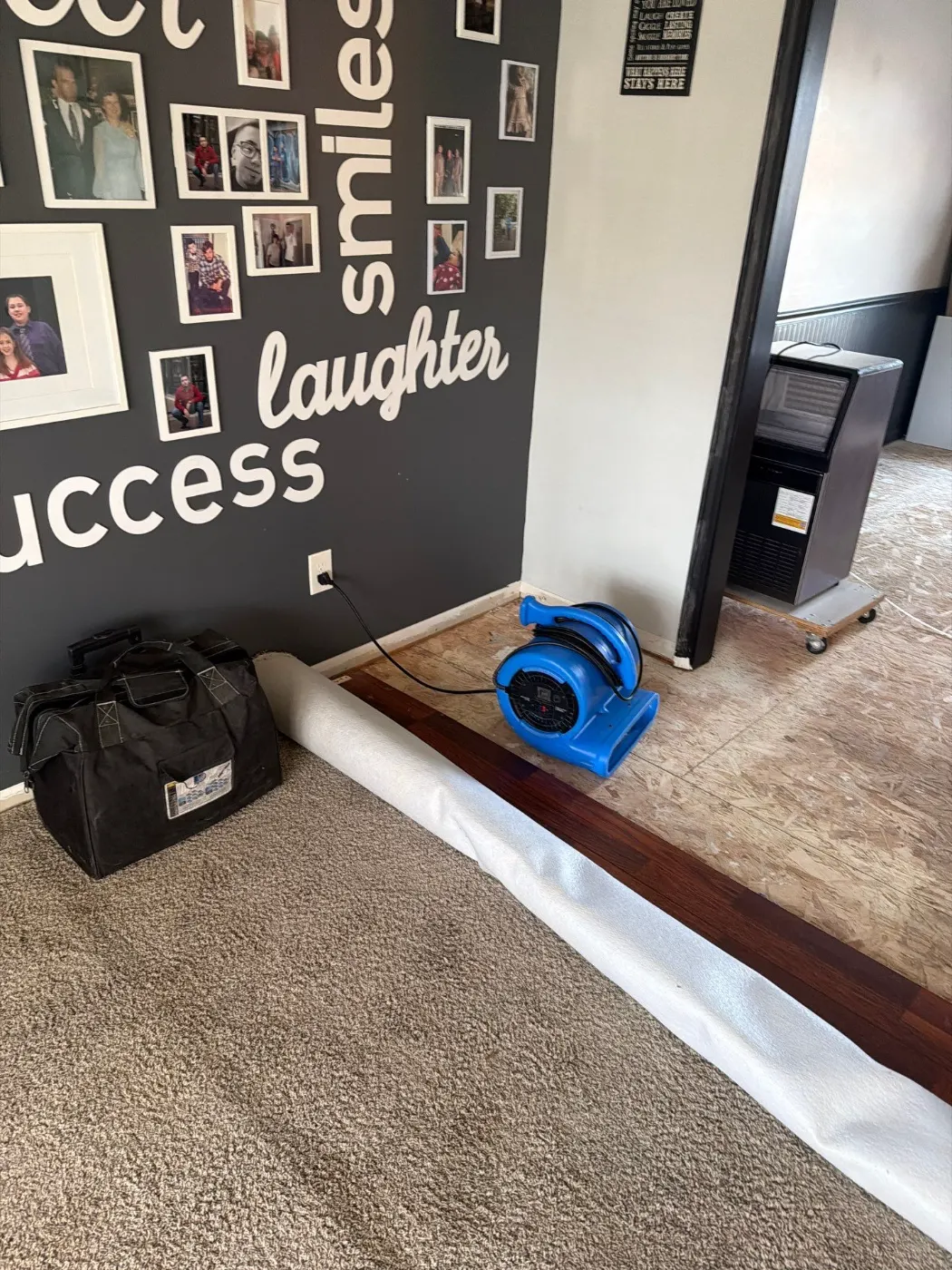
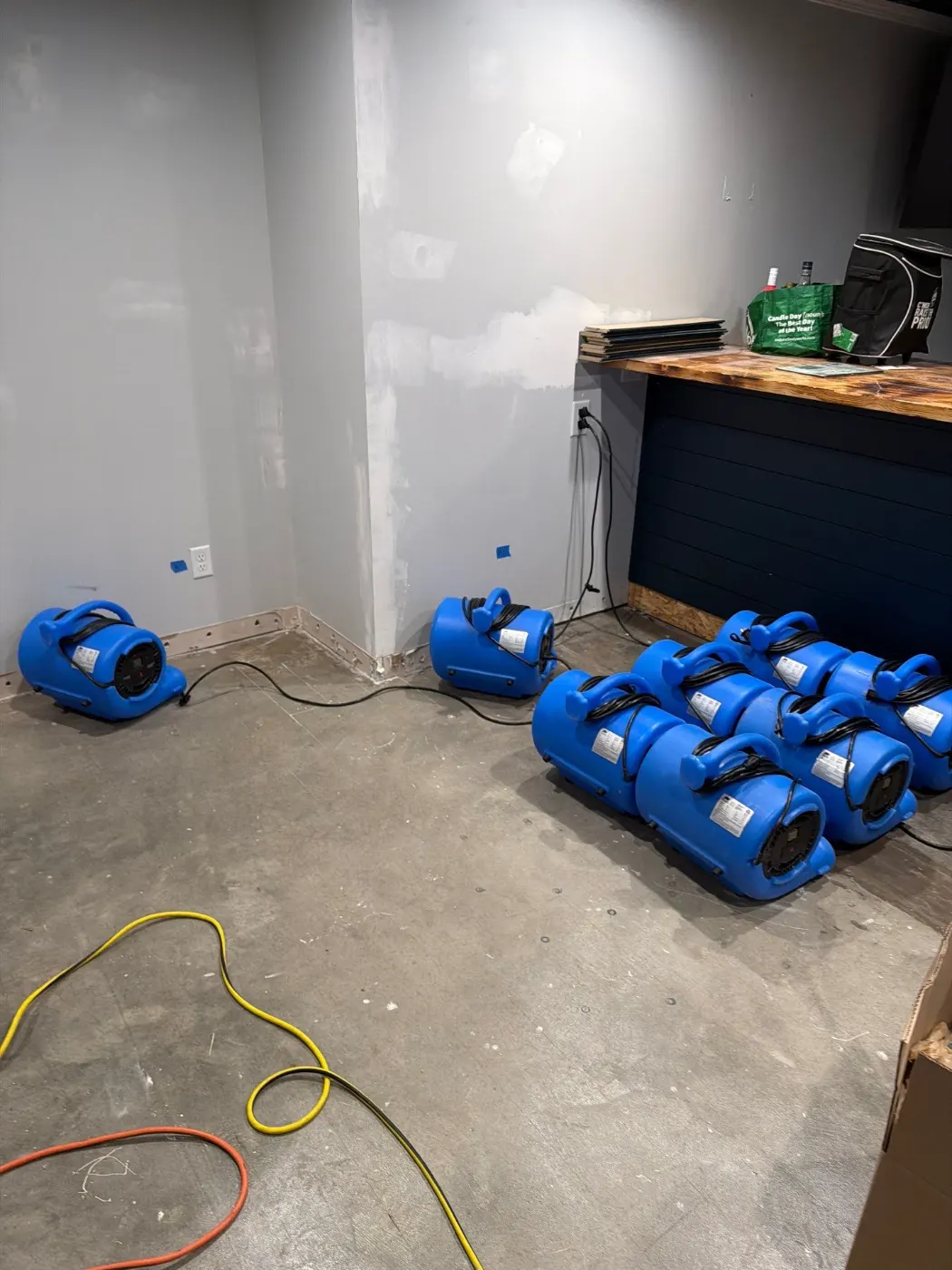
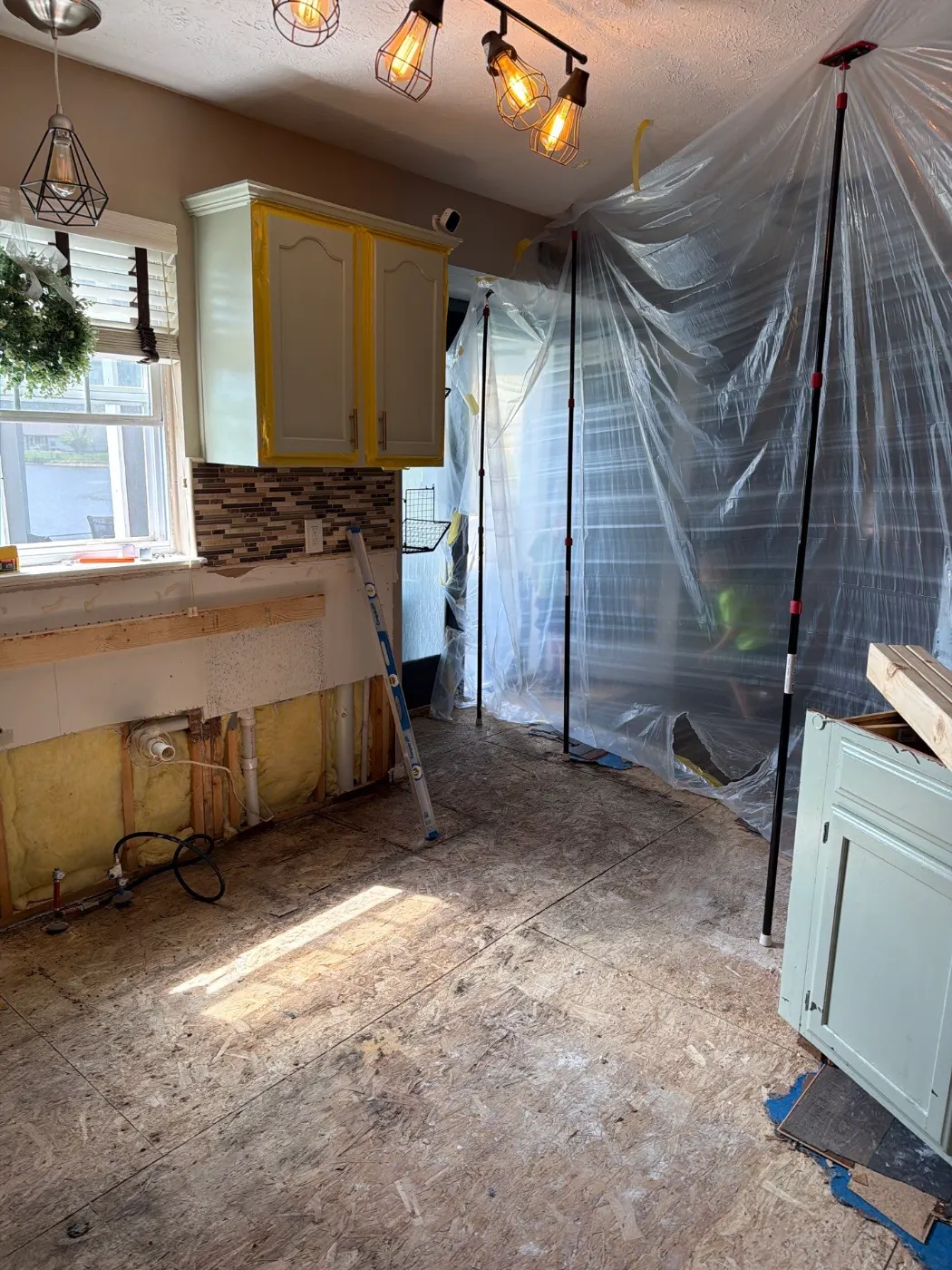
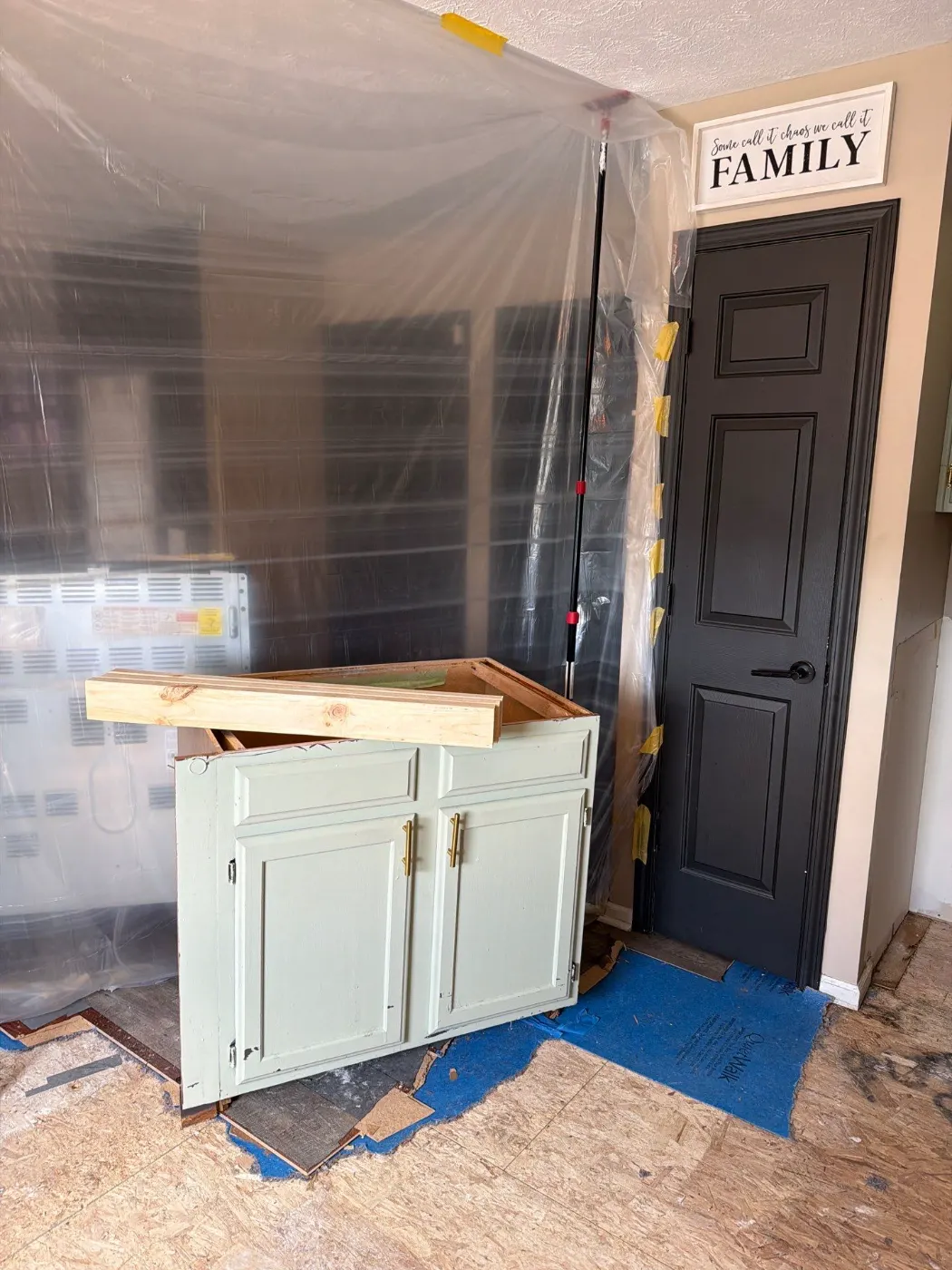
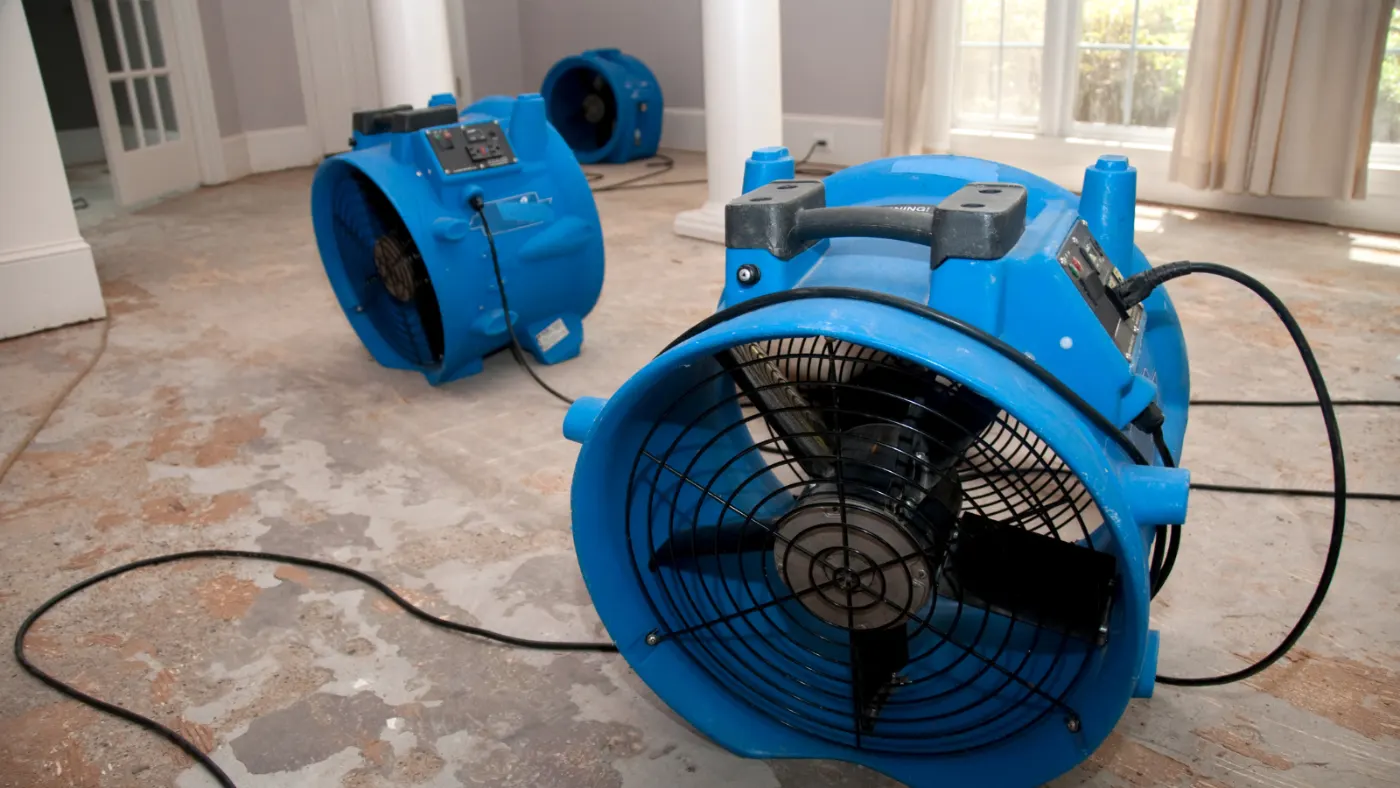
Photographs from real commercial flood damage cleanup jobs completed by our crew in Sawgrass and surrounding areas.
Commercial Flood Damage Cleanup FAQ
Questions Sawgrass property managers ask us about commercial flood damage cleanup.
Guidance and Standards for Commercial Flood Damage Cleanup
- The ANSI/IICRC S500 is the published standard for professional water damage restoration. The current edition is the Fifth Edition, 2021. IICRC S500 Standard
- EPA advises drying water damaged areas and items within 24 to 48 hours to prevent mold growth. EPA: A Brief Guide to Mold, Moisture and Your Home
Sawgrass Neighborhoods We Serve
We take commercial flood damage cleanup calls in every part of Sawgrass. Pick your neighborhood for local details.
Other Restoration Services in Sawgrass
Sawgrass Water Restoration handles the full scope of restoration work. Explore our other services below.
Water Damage Restoration in Sawgrass
24/7 emergency response. IICRC certified water restoration from extraction to full dry out.
Learn more →Basement Flooding in Sawgrass
Basement water emergencies handled fast. Extraction, drying, mold prevention.
Learn more →Sewage Cleanup in Sawgrass
Category 3 biohazard cleanup. Full containment, decontamination, structural restoration.
Learn more →Request Commercial Flood Damage Cleanup
Reach Us Directly
Our team is available 24/7 for emergencies and ready to schedule inspections during business hours.
Need Immediate Help?
For active water or mold emergencies, call us directly. We are available 24/7.